

Introduction
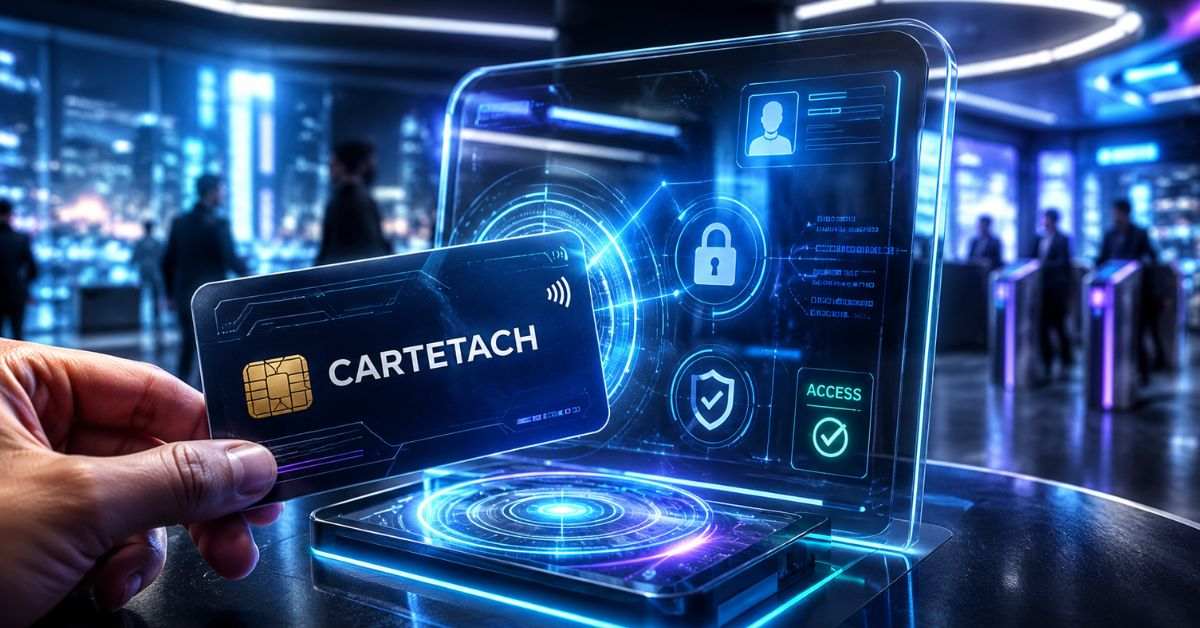
Cartetach is a modern digital smart card idea built around secure data storage, embedded microchips, and near-field communication. People already use tap-based cards for payments, office doors, transport, hotel rooms, and school IDs. The next step is making these cards smarter, safer, and easier to manage. This is where Cartetach becomes useful as a technology concept.
Instead of carrying many cards or typing passwords repeatedly, users can tap one secure card to confirm identity, open access, or connect with a system. For businesses, it can reduce manual checks and improve control over who can enter, pay, or use services. Still, any digital card must be designed with strong privacy because it may handle private information.
What Is Cartetach?
Cartetach refers to a smart card system that can store, manage, and protect user data through a tiny chip. This chip may communicate with a reader through contactless NFC technology. When a user taps the card near a reader, the system checks whether the card is valid and then allows the appropriate action. A simple example is an employee tapping a card to enter an office. A student may use one card for attendance, library access, printing, and cafeteria payments. The main value of this technology is that it can connect identity, access, and digital services in one controlled system.
How the Technology Works
A digital smart card usually has three main parts: the card chip, the reader, and the management system. The chip stores approved data or a secure identity token. The reader sends and receives signals. The management system checks permissions and keeps records. NFC means near-field communication. It works at very close range, usually when the card is near the reader. In many systems, the card does not share full personal details every time. Instead, it may share a protected code that the system can verify.
Here is the basic process
- The user taps the card near a reader.
- The reader checks the chip or secure token.
- The system approves, blocks, or records the action.
- The user gets access, payment approval, or identity confirmation.
Why Cartetach Matters in 2026
In 2026, digital identity matters because people use online and physical systems together. A person may prove identity at a building door, on a computer, at an event, or during a payment. A smart card can make these checks smoother. Many users are tired of weak passwords, too many apps, and carrying separate cards. Businesses also want better control without slowing everyone down. That is why contactless smart card technology fits workplaces, schools, transport systems, and membership programs.
Cartetach also supports the idea of “less friction.” This means fewer steps for the user. A tap can replace a manual sign-in, paper pass, or repeated password check. However, speed should never come before safety.
Common Uses in Real Life
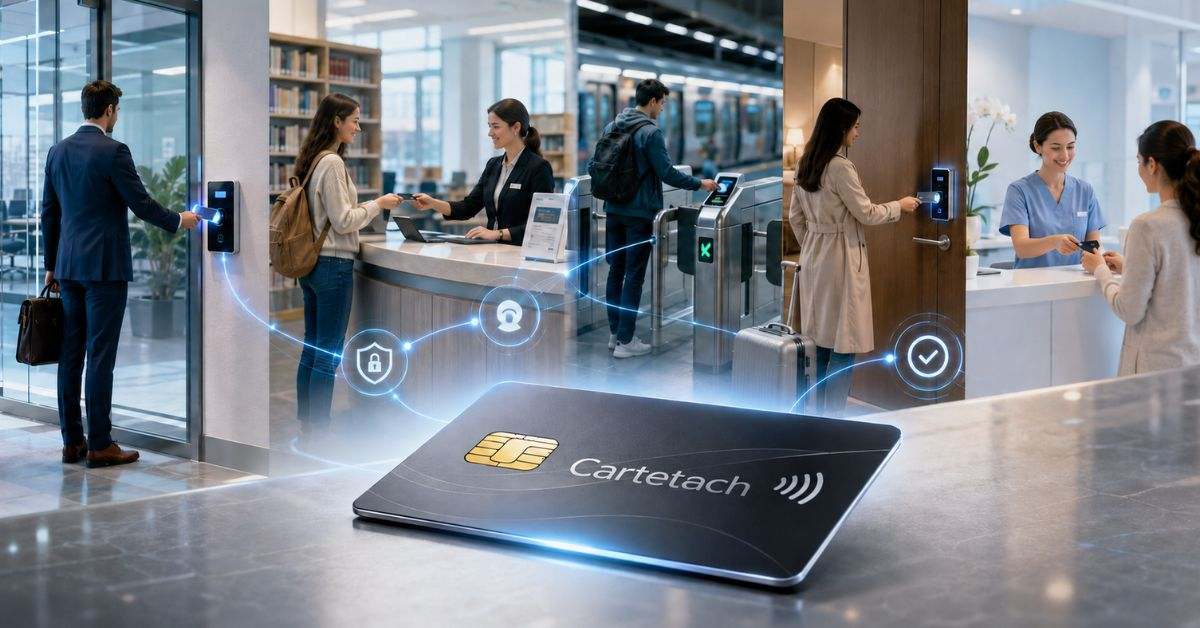
Cartetach can be useful in many places where identity or access needs quick checking. It can support simple tasks and connect to larger digital systems.
Common examples include
- Offices using smart cards for employee entry and secure zones.
- Schools use one card for attendance, library access, and student services.
- Events using contactless badges for quick check-in and VIP access.
- Hotels using cards for rooms, elevators, and guest services.
- Clinics using secure cards to reduce identity mistakes.
These examples show why the technology is more than a normal card. It can connect people with services in a faster and more organized way.
Security and Privacy Concerns
Security is the most important part of any smart card system. A card that handles identity or access data must protect users from misuse. Privacy should also be clear, so users know what information is collected and why. A safe system should avoid storing unnecessary personal details. It should use secure tokens, encrypted storage, strong admin controls, and a clear process for lost cards. Users should also know whether their card activity is tracked.
Before trusting the system, users should ask:
- What data is stored on the card?
- Can the card be blocked if lost?
- Is the data encrypted during use?
- Who is authorized to view access logs or user history?
- Is there a clear privacy policy?
What Businesses Should Verify First
A company, school, or public service should not choose a smart card system only because it sounds advanced. The real question is whether it solves a daily problem safely. Before adopting Cartetach, decision-makers should verify compatibility with current readers, doors, apps, and databases. Cartetach adoption should also make it easy to add users, remove old users, and change permissions. Support is another major point. If a card stops working, users need quick help. The provider should explain replacement steps, admin training, privacy settings, and security updates.
Future of Digital Smart Cards
The future of smart cards is about making identity and access more trusted. As NFC systems improve, cards may work better with mobile apps, digital wallets, office tools, and secure cloud platforms. Cartetach may become more useful if it supports flexible permissions, safer authentication, and simple recovery options. For example, a user might manage card settings through an app, while an admin controls business access through a secure dashboard. Still, the best future is not one where every action is tracked without reason. Users need convenience and control together. Smart card technology should help people move faster while keeping their information protected.
Conclusion
Cartetach is a useful smart card concept for 2026 because it brings identity, access, and digital services into one secure, tap-based experience. It can help users save time, reduce card clutter, and move through daily tasks more easily. For organizations, it can improve access control and service management.
The technology is strongest when it uses NFC, embedded chips, encryption, and a reliable management system. But users should never ignore privacy. Before using any smart card solution, check what data is stored, how it is protected, and what happens if the card is lost. When intending to implement Cartetach in a business, educational institution, or service framework, commence with a limited trial, meticulously assess security measures, and select a configuration that safeguards individuals while providing assistance.