


Introduction
The internet creates unfamiliar words at remarkable speed, often giving them visibility before anyone can explain their origin. Some begin as usernames, gaming tags, private jokes, brand ideas, or typing errors. Others spread because search engines and social platforms repeatedly show them to curious users. Dinituve belongs to this growing group of mystery terms. People may find it in profiles, comments, search suggestions, website addresses, or private messages and naturally want a dependable explanation. No widely accepted dictionary definition has been confirmed. Its likely purpose depends on the original source, nearby words, and the way it is used. This guide explains the strongest possibilities and shows how to investigate the term carefully.
What Does “Dinituve” Mean?
“Dinituve” is best described as an unverified digital expression. It may have a private meaning for one user or online community, but it does not have one standard meaning in everyday English.
The most likely explanations include:
- A username or nickname.
- A made-up brand or project title.
- A typing or spelling error.
- A gaming name, code, or private label.
- A random word created by software.
A definition found on one website is not enough to prove anything. Strong evidence should come from an original creator, verified profile, official record, trusted dictionary, or clearly documented source.
Why Is It Appearing Online?
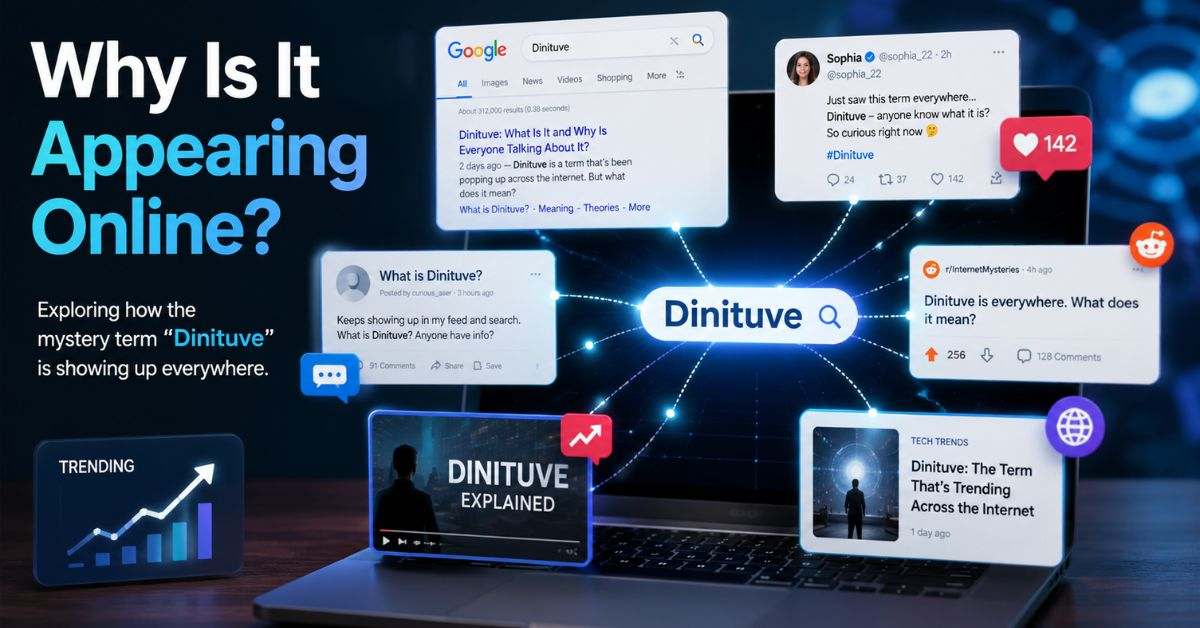
“Dinituve” may be gaining attention because unusual words create curiosity. People search for expressions they do not recognize, and publishers may create articles about them. This phenomenon can make a term appear more established than it really is.
Mystery words often spread through:
- Social media accounts and comments.
- Gaming groups and chat rooms.
- Automated keyword collections.
- Search suggestions and copied articles.
- New websites or creative projects.
One appearance can cause searches. Those searches encourage more articles, and the articles increase visibility. However, repeating the same claim does not make it true.
Where Might You See the Term?
The place where Dinituve appears often provides the strongest clue about its purpose.
| Online Location | Possible Meaning | Useful Check |
| Social media profile | Username or alias | Read the profile bio |
| Gaming platform | Player or clan name | Review account history |
| Website address | Brand or project | Check the site owner |
| Message or comment | Typo, joke, or code | Read the full conversation |
| Download page | Product or file name | Verify the source |
A word shown beside a profile picture probably serves a different purpose from the same word shown on a software page. The surrounding content should always guide the explanation.
Could It Be a Spelling Mistake?
“Dinituve” could be a typing error. Fast typing, autocorrect, voice input, translation software, and poor text scanning can create unusual spellings. It may resemble words such as “diminutive,” “definitive,” “distinctive,” or “distributive.” Similar letters do not prove that these words are connected.
Replace the unfamiliar spelling with each possible word in the original sentence. The best option should improve the meaning and match the topic. When none of the replacements works, the term may be an intentional name.
How to Check Dinituve Properly
A careful investigation should begin with the original source. The main goal is to identify the earliest reliable use of the term.
Follow these steps
- Copy the exact spelling and capital letters.
- Save the page, account, or message.
- Search the phrase inside quotation marks.
- Compare older results with recent results.
- Check dictionaries and verified profiles.
- Look for an original creator or owner.
- Treat unsupported claims as theories.
The most accurate search result isn’t necessarily the first one. Several websites may repeat information without checking where it started.
How Strong Is the Evidence?
When Dinituve appears on several websites, examine the quality of the sources instead of simply counting them.
| Evidence Type | Trust Level | What It Suggests |
| Official dictionary or database | High | A documented meaning exists |
| Verified creator or brand | Medium to high | Ownership is clearer |
| Independent reliable sources | Medium | Usage may be becoming stable |
| Blogs without original sources | Low | Claims may have been copied |
| One isolated post | Very low | There is too little context |
One verified profile may provide stronger evidence than ten anonymous articles. Writers should clearly mention uncertainty when reliable information is unavailable.
Why Context Matters
Context shows whether a strange expression is being used as a name, product, joke, action, or error. Readers should check the page topic, account owner, publication date, nearby words, pictures, and links. For example, “Follow Dinituve for gaming clips” strongly suggests a username. A request to install it may point to an application or file. A creator presenting it as a new project is probably using it as a title. The same spelling can serve different purposes in separate communities. Therefore, one explanation should not be applied to every online appearance.
Can “Dinituve” Become a Username or Brand?
The term may appeal to creators because it is unusual and memorable. It could work as a gaming identity, art page, blog name, fictional character, or digital project.
Before using it publicly
- Search major platforms for matching accounts.
- Check domain and trademark records.
- Look for similar company names.
- Test the pronunciation with other people.
- Review possible meanings in other languages.
- Confirm that the name suits the audience.
These checks can reduce confusion, legal problems, and accidental connections with an existing business or online identity.
Is It Safe?
The spelling itself is not known to be harmful, but Dinituve could appear beside a suspicious link, fake download, misleading advertisement, or payment request. The source creates the risk, not the word alone.
Be cautious when it appears with the following:
- Time-sensitive requests for money.
- Password or security-code demands.
- Unexpected files or applications.
- Hidden or shortened links.
- Unrealistic prize promises.
- Instructions to disable security tools.
Search the term separately instead of opening an unknown link. When a message claims to represent a company, visit that company through its official website.
Could Its Meaning Change?
“Dinituve” could gain a stable definition if a creator, company, game, or online community begins using it consistently. Many familiar brand names and slang expressions originally started as invented words. A shared meaning could develop through a popular account, registered product, fictional character, meme, video, song, or community joke. Until that happens, confirmed information should remain separate from personal guesses.
FAQs
Is Dinituve a real word?
It appears online, but it does not currently have a widely accepted dictionary meaning.
Is it a username?
It may be. A profile biography, account history, and linked pages can help confirm that use.
Is it a spelling error?
Possibly. Test similar words in the original sentence and select only the one that fits the context.
Can it be used as a business name?
Yes, but trademark, domain, language, and social media checks should be completed first.
Is the term dangerous?
The term itself is not proven dangerous, although unknown links or downloads connected to it may carry risks.
Conclusion
“Dinituve” is better understood as an emerging or unverified online expression than as a word with one proven definition. It could represent a username, brand idea, gaming tag, private code, random string, or spelling mistake. The strongest clues come from the original page, account, sentence, and surrounding links. Readers should compare trustworthy sources, check official records, and avoid believing claims that provide no evidence. Extra caution is necessary when the term appears with downloads, payment demands, or hidden links. Online repetition does not create a dependable definition. Return to the first place where you discovered the word, examine its context, and use the checks in this guide to reach a safer and more accurate conclusion.