


Introduction
Industrial systems power many things we use every day, including factories, energy plants, water systems, and transport networks. As these systems become more connected in 2026, they also face higher cyber risks. A single attack on an industrial network can cause downtime, safety issues, financial loss, and damage to public trust.
That is why GICSP certification is important for professionals who want to build a career in industrial cybersecurity. It helps prove that you understand both cyber defense and operational technology. This guide explains the exam, required skills, study tips, and career value in simple English so beginners and professionals can plan their next step with confidence.
What Is This Certification?
The Global Industrial Cyber Security Professional credential is offered by GIAC. GICSP certification checks whether a person understands how to secure industrial systems. These systems are different from normal office computers because they control real machines and physical processes. For example, a factory may use sensors, control panels, networks, and machines that must run safely. A power plant may use systems that must stay online all the time. In these places, cybersecurity is not only about protecting files. It is also about keeping people safe and keeping operations running.
The GICSP certification is useful because it connects cybersecurity knowledge with industrial control knowledge. It helps prove that a person understands both digital threats and real-world systems.
Why GICSP Certification Matters in 2026
In 2026, networks, cloud tools, remote access platforms, and smart monitoring systems connect more industrial systems. This improves speed and control, but it also increases risk. Cybercriminals now target factories, utilities, pipelines, and other critical systems. These attacks can cause downtime, financial loss, and safety problems. Because of these threats, companies need people who understand industrial cyber defense.
This credential matters because it indicates that a person can think beyond normal IT security. Careful planning is essential for OT security, as shutting down systems is often challenging. Even a small mistake can affect production or safety. For employers, this certification can show that a candidate understands risk, systems, controls, and real-world security needs.
Who Should Earn It?
This credential is best for people who work with industrial systems or want to enter the OT security field.
Good candidates include:
- IT security analysts who want to move into industrial cybersecurity
- Network engineers who support factories, utilities, or control systems
- Control system engineers who want to learn cyber defense
- Security consultants working with industrial clients
- Managers responsible for OT risk, safety, or compliance
You do not need to be a top expert before starting. But you should understand basic networking, cybersecurity terms, and how computers communicate. GICSP certification also helps if you know how industrial environments work. A beginner can still prepare well by using official objectives, training, practice exams, and simple lab work.
Exam Format and Key Details
The exam is designed to test real understanding, not just memory. GIAC currently lists the exam as a proctored test with 82 questions, a 3-hour time limit, and a 71% passing score. Candidates should always check the official GIAC website before registering because exam rules can change.
| Exam Detail | Information |
| Certification body | GIAC |
| Main area | Industrial cybersecurity |
| Exam length | 3 hours |
| Number of questions | 82 |
| Passing score | 71% |
| Best for | ICS, OT, security, and engineering professionals |
| Testing style | Proctored exam with practical knowledge focus |
The GICSP certification exam may include questions about industrial systems, network security, incident response, endpoint hardening, and OT risk. Since it is practical, candidates should study real examples, not only definitions.
Main Skills You Need
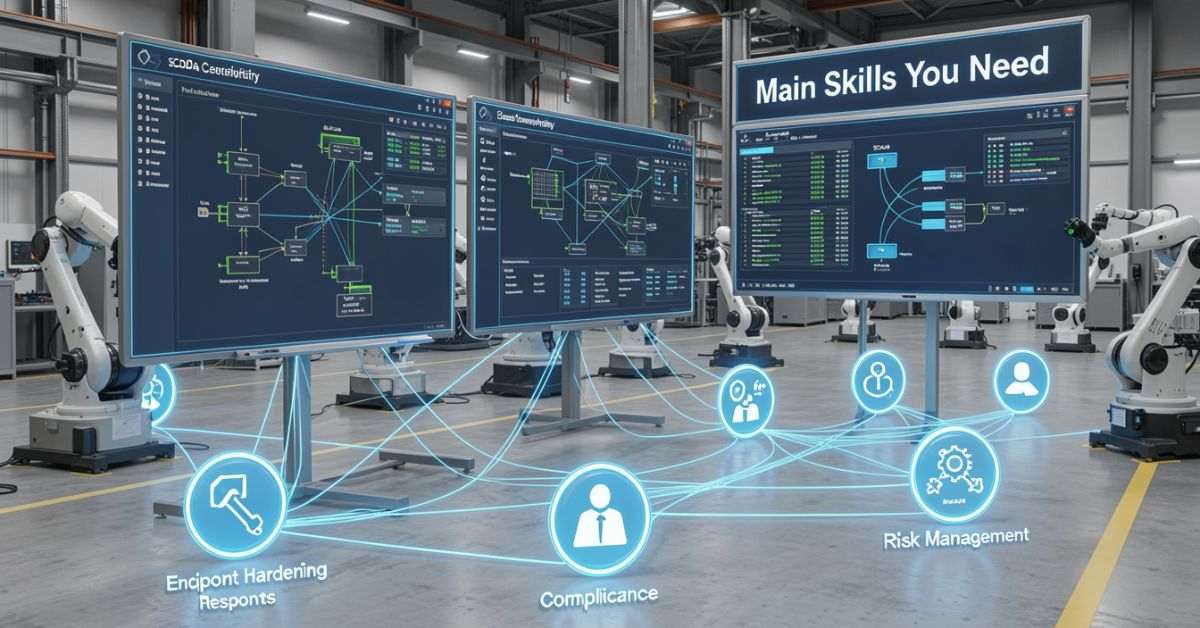
To prepare well, you need to understand how industrial environments work. Normal IT security skills are helpful, but they are not enough by themselves. Important skills include understanding industrial control systems, SCADA environments, PLCs, HMIs, network zones, cyber risk, secure remote access, and incident response. You should also understand how security decisions are impacted by uptime and safety.
For example, in an office network, you might restart a computer quickly. In a factory, restarting a control system without planning could stop production or create danger. This is why OT security requires patience, teamwork, and careful change control. A strong candidate understands both technical tools and business impact. They can explain risk to engineers, managers, and security teams in clear language.
IT Security vs. OT Security
IT and OT security are related, but they are not the same. IT usually protects data, business systems, email, websites, and user accounts. OT protects machines, sensors, controllers, and physical processes.
| Area | IT Security | OT Security |
| Main goal | Protect data and systems | Protect safety, uptime, and operations |
| Common systems | Laptops, servers, cloud apps | PLCs, HMIs, SCADA, sensors |
| Downtime impact | Business delay | Production stop or safety risk |
| Update style | Faster patching | Careful testing before change |
| Main concern | Data theft | Physical and operational impact |
This difference is one reason industrial cyber professionals are in demand. They must understand both cyber threats and real-world system behavior.
Simple Study Plan
A well-defined study strategy facilitates the process. Do not try to learn everything in one week. Allow yourself enough time to read, practice, review, and test your weak areas.
A good preparation path is the following:
- Read the official exam objectives and mark the topics you do not know. Study ICS architecture, OT networks, industrial protocols, incident response, endpoint protection, and risk management. Make a simple glossary for terms like PLC, HMI, SCADA, Purdue model, historian, firewall, segmentation, and remote access.
- Practice with real-world examples. Ask questions like: “What happens if a factory network is attacked?” or “How should a team respond without stopping safe operations?” Take practice exams, review wrong answers, and improve your notes before booking the real exam.
This plan helps you build confidence instead of only memorizing facts. The goal is to understand how to make safer decisions in industrial environments.
Career Benefits
The GICSP certification can help you stand out in a specialized cybersecurity field. Many people understand general IT security, but fewer people understand OT and industrial control systems. This credential may support jobs such as OT security analyst, ICS security engineer, industrial cybersecurity consultant, security architect, risk analyst, or incident response specialist. These roles can exist in energy, water, oil and gas, manufacturing, transport, and other critical industries.
The biggest benefit is trust. Employers want people who can speak with both security teams and engineering teams. A certified professional can help connect these groups and make better decisions. GICSP certification may also help you qualify for advanced roles, client-facing consulting work, or projects that involve critical infrastructure protection.
Common Mistakes to Avoid
Many candidates prepare the wrong way. They treat the exam like a normal IT test and ignore the industrial side. That can lead to weak results. Common mistakes include studying only cybersecurity theory, ignoring safety, skipping industrial protocols, not learning system architecture, and waiting too long to take practice tests.
Another mistake is using unreliable exam dumps. These may be outdated, unethical, or incorrect. They can also hurt real learning. Using official materials, reliable training, notes, laboratories, and practice tests is a preferable strategy. Furthermore, do not ignore time management. The exam has many questions, so you need to read carefully but not too slowly.
FAQs
Is this certification hard?
Yes, GICSP certification can be challenging because it covers both cybersecurity and industrial control systems.
Do I need industrial experience first?
Experience helps, but motivated IT professionals can prepare with proper study and practice.
What jobs can GICSP certification help with?
GICSP certification can help with OT security, ICS engineering, industrial cyber consulting, and risk roles.
Is GICSP certification useful in 2026?
Yes, because industrial systems are more connected and need stronger cyber protection.
How should I start studying?
Start with official exam objectives, then build a glossary, study one topic at a time, and take practice tests.
Conclusion
The GICSP certification is a strong choice for anyone who wants to work in OT security, ICS protection, or critical infrastructure cybersecurity. It is not only about passing an exam. It is about learning how to protect real systems that keep businesses, communities, and public services running safely.
In 2026, industrial cybersecurity skills are more valuable than ever because connected machines, remote access, and smart systems are growing fast. Start by reviewing the exam topics, building a simple study plan, and practicing real-world OT security scenarios. With steady preparation, this certification can become an important step toward a trusted cybersecurity career.