


Introduction
“StartupBooted Forex” is a modern term linked with foreign exchange learning, smart trading tools, and startup-style thinking. It is not best understood as a guaranteed trading system. Instead, it can be considered a flexible way to learn forex, test ideas, manage risk, and adapt to fast market changes.
In 2026, forex trading is easier to access than before. Many people can open trading apps, use demo accounts, follow market news, and study currency pairs from a mobile phone. But easy access does not mean easy profit.
What Does “StartupBooted Forex” Mean?
StartupBooted Forex describes a learning approach that mixes forex education with startup-style problem-solving. A startup usually tests small ideas, studies results, improves quickly, and avoids wasting resources. The same idea can help beginner traders. Instead of risking a lot of money quickly, a learner can start small, study market behavior, use a demo account, and improve step by step.
In simple words, this approach means the following:
- Learn before trading.
- Test ideas with low risk.
- Use data instead of emotions.
- Review mistakes often.
- Adapt when the market changes.
Forex markets can move quickly because of interest rates, economic news, inflation, central bank decisions, and global events. A flexible learning style can help traders avoid blind guessing.
Why Forex Learning Matters in 2026
The foreign exchange market is one of the most active financial markets in the world. People trade currencies for business, investing, travel, banking, and speculation. Because of this, prices can change every second. In 2026, beginners see many online promises about quick profits, AI trading tools, and automated signals. Some tools are useful, but many claims are risky or misleading.
Good forex education helps users understand the following:
- How currency pairs work
- Why prices move
- What leverage means
- How spreads and fees affect trades
- Why risk management is important
- How to avoid scams and fake profit claims
The main goal for beginners should not be fast money. The first goal should be learning, safety, and discipline.
Startup Thinking vs. Traditional Trading Learning
Traditional forex learning often focuses on charts, indicators, and trade setups. Startup-style learning adds testing, feedback, and improvement.
| Approach | Traditional Learning | Startup-Style FX Learning |
| Main focus | Learn rules and strategies | Test, review, and improve |
| Risk style | May jump into live trades | Starts with demo or small tests |
| Mindset | Follow one fixed method | Adapt to changing conditions |
| Review process | Sometimes ignored | Regular journaling and feedback |
| Best for | Basic theory | Long-term skill building |
This does not mean traditional learning is bad. Beginners still need to understand charts, pips, spreads, and price movement. But a startup-style method makes the learning process more practical and safer.
Important Forex Terms Beginners Should Know
Before using any trading platform, beginners should understand common forex terms. These words appear often in tutorials, broker pages, and trading apps.
- Currency pair: Two currencies traded together, such as EUR/USD or GBP/USD.
- Pip: A small price movement in a currency pair.
- Spread: The difference between the buying price and selling price.
- Leverage: Borrowed trading power that can increase both profit and loss.
- Margin: Money needed to open a leveraged trade.
- Stop-loss: A tool that closes a trade when loss reaches a set level.
- Demo account: A practice account that uses virtual money.
These terms may look difficult at first, but they become easier with practice. A beginner should not trade real money until these basics are clear.
Useful Tools for Modern Forex Learners
Modern FX trading includes many digital tools. Some help with learning, while others help with research, planning, or trade tracking.
Helpful tools include
- Demo accounts for safe practice
- Economic calendars for major news events
- Charting platforms for price analysis
- Trading journals for reviewing mistakes
- Risk calculators for position sizing
- News alerts for market updates
- AI research tools for quick summaries
However, tools should not replace thinking. A beginner can lose money even with advanced software if they do not understand risk. The best tool is still a clear plan.
Understanding the differences between a Learning Source, a Broker, and a Bot is crucial.
Many beginners get confused between education sites, brokers, and trading bots. This distinction is important because each one has a different purpose.
| Type | What It Does | What to Check |
| Learning website | Teaches forex basics | Is the content clear and honest? |
| Broker | Allows users to place trades | Is it regulated and transparent? |
| Trading bot | Trades automatically | Are results verified and realistic? |
| Signal group | Shares trade ideas | Are claims honest or exaggerated? |
| Demo platform | Helps users practice | Does it match real trading conditions? |
If a site only teaches forex, it should not be treated like a broker. If a platform asks for deposits, you should check its license, fees, withdrawal rules, and risk warnings first.
Main Risks Beginners Must Understand
Forex trading has real risk. Many beginners lose money because they trade too soon, use too much leverage, or follow random signals.
Common risks include
- Losing money quickly because of leverage
- Trading based on emotion
- Believing fake “guaranteed profit” claims
- Using unverified trading bots
- Ignoring stop-loss rules
- Trading during major news without understanding volatility
- Depositing money with unsafe brokers
A safer rule is simple: never trade money you cannot afford to lose. If you are new, use a demo account first. If you move to real money later, start small and focus on learning, not chasing profit.
AI and Automation in Forex
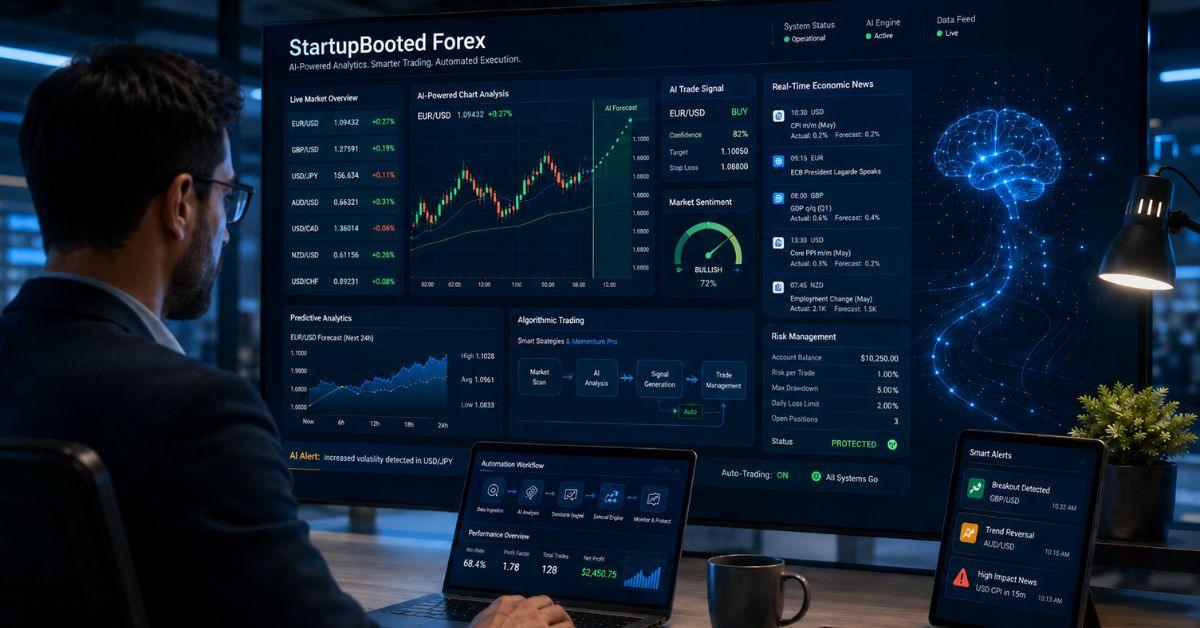
AI tools are becoming popular in 2026. They can help traders read news faster, summarize market events, review charts, or track journal patterns. Some platforms also offer automated trading systems.
AI can be useful for
- Market summaries
- Trade journaling
- Pattern alerts
- News tracking
- Strategy testing
- Risk reminders
But AI is not magic. StartupBooted Forex can make mistakes, misunderstand market context, or give weak signals. A trading bot can also fail when market conditions change. Beginners should use AI as a helper, not as a decision-maker. Do not blindly take a trade if you do not understand the reasons behind its opening.
How to Check a Forex Platform Safely
Before trusting any forex-related platform, do a safety check. This step is crucial because financial scams often look professional.
Check these points
- Does the platform show real company information?
- Is the broker regulated by a known authority?
- Are fees, spreads, and commissions clear?
- Are withdrawal rules easy to understand?
- Does the site promise guaranteed profit?
- Are reviews balanced or only overly positive?
- Does customer support answer clearly?
A trustworthy service will explain risk. A suspicious one may pressure users to deposit quickly, promise fixed returns, or hide important details.
Simple 30-Day Beginner Plan
A beginner can use this simple plan before risking real money.
Week 1: Learn the basics
- Study currency pairs, pips, spreads, and leverage.
- Watch simple forex lessons.
- Read about risk management.
Week 2: Practice on demo
- Choose one or two major pairs.
- Place demo trades only.
- Learn how stop-loss and take-profit work.
Week 3: Build a trading routine
- Write down every trade idea.
- Record why you entered and exited.
- Avoid emotional trading.
Week 4: Review and improve
- Check your wins and losses.
- Identify repeated mistakes.
- Decide what needs more practice.
This plan helps learners build discipline before using real money.
Best Practices for Safer Forex Learning
The best traders are not always the people with the most tools. They are often the people with patience, rules, and emotional control.
Useful habits include
- Trade less, but think more.
- Keep a written trading journal.
- Risk only a small amount per trade.
- Avoid revenge trading after losses.
- Learn one strategy before trying many.
- Check news before opening trades.
- Take breaks when emotions are high.
StartupBooted Forex works best when learners treat trading like a skill, not a shortcut. The more carefully you learn, the better your chances of avoiding common beginner mistakes.
FAQs
Is StartupBooted Forex a broker?
No, StartupBooted Forex is better understood as a forex learning idea or approach.
Can beginners use this method?
Yes, beginners can use StartupBooted Forex to learn slowly, test ideas, and manage risk.
Is forex trading safe?
Forex is risky, especially with leverage, so beginners should start with demo practice.
Are AI forex tools reliable?
They can help with research, but they should not be trusted blindly.
What is the best first step?
Learn basic terms, open a demo account, and create a simple risk plan.
Conclusion
StartupBooted Forex is useful for beginners who want a smarter and safer way to understand the modern currency market. It encourages learning, testing, reviewing, and improving instead of rushing into risky trades. Forex in 2026 is full of tools, apps, AI systems, and online advice. Some of these resources are helpful, but others can be confusing or unsafe. That is why beginners should focus on education, risk control, and platform verification first.
The best next step is simple: create a 30-day demo trading plan, learn the basic terms, and write down clear risk rules before using real money. If you cannot explain your trading plan in simple words, you are not ready to trade live yet.