

Introduction
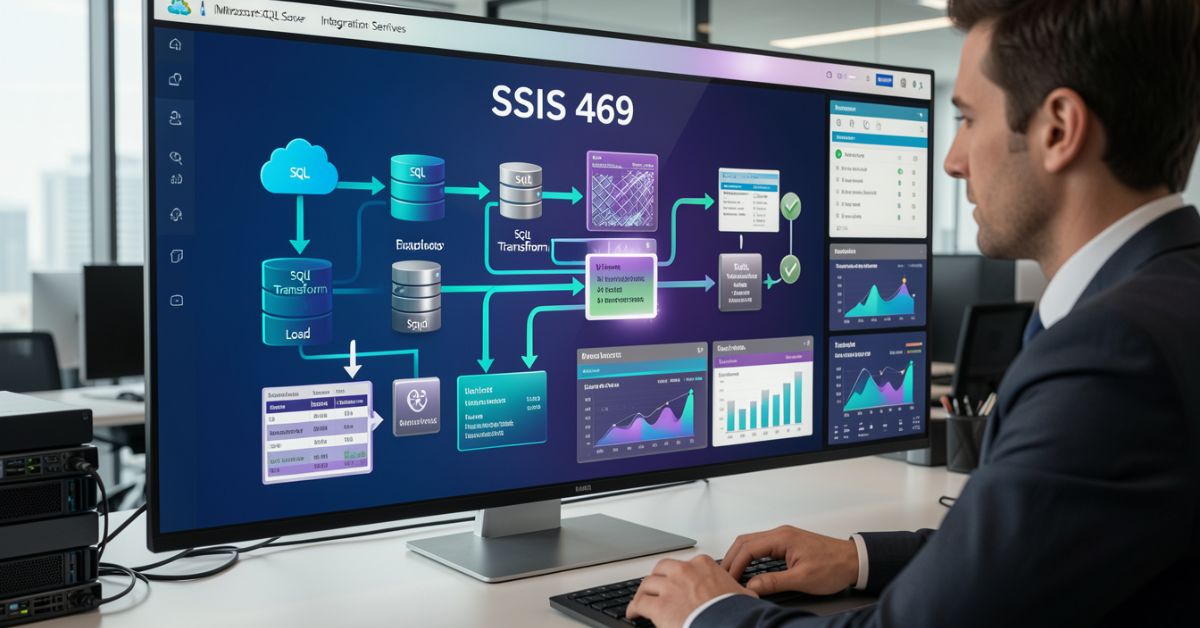
Modern companies collect information from websites, sales systems, customer records, mobile apps, and cloud platforms. This information becomes valuable only when it is moved, cleaned, checked, and stored correctly. Data integration tools help businesses complete these tasks with fewer errors and less manual work. SSIS 469 is a term that appears in searches related to Microsoft SQL Server Integration Services, but its exact meaning is often unclear. Some pages describe it as a version, while others call it an error, update, or package name.
The safest approach is to study the term within its real technical setting. Microsoft SSIS is an enterprise platform used to extract, transform, and load data. It helps teams combine information from different sources and prepare it for reports, analytics, and business decisions. This guide explains what SSIS 469 may mean, how SSIS packages work, and how to investigate related problems safely in 2026 for businesses.
What Does SSIS 469 Mean?
SSIS 469 is not listed by Microsoft as a standard Integration Services version. It may be an internal package number, project label, support ticket, build reference, file name, or shortened error number. Its location provides the best clue. A package name is different from a database error. Read the full message and review company records before changing software. Ask the database team whether SSIS 469 is an internal label before attempting a solution.
How SQL Server Integration Services Works
SQL Server Integration Services moves and prepares data. Developers build packages that connect to files, databases, cloud services, and business applications.
Typical jobs include the following:
- Reading customer records
- Importing CSV or Excel files
- Removing duplicate entries
- Changing dates and number formats
- Loading clean data into reports
A package labeled SSIS 469 still uses standard SSIS tools.
Understanding the ETL Process
ETL means extract, transform, and load. These stages support many data projects.
| Stage | Purpose | Example |
| Extract | Collect data | Read database orders |
| Transform | Clean data | Remove duplicates |
| Load | Save data | Fill a data warehouse |
Extraction gathers records, transformation organizes them, and loading sends them to a target system. Validation should check missing fields, row totals, data types, and rejected records. A well-planned ETL process improves data quality and gives managers more reliable information. It also reduces the time employees spend correcting records by hand.
Main Parts of an SSIS Package
An SSIS package contains parts that control tasks, connections, and data movement.
- Control flow sets task order
- Data flow moves records
- Connection managers link systems
- Variables hold changing values.
- Parameters control settings
- Event handlers react to failures
- Logs record activity
If SSIS 469 appears in a package name, these standard parts still apply. Each part has a different job. For instance, the data flow controls the actual transfer of records, but the control flow determines which job is executed first. Logs help administrators understand what happened during each package run.
How to Identify the Number Correctly
Never assume every use of 469 has the same meaning. The number may have been created by a company, developer, database system, or website.
| Location | Possible meaning | Best action |
| Package name | Internal ID | Check documents |
| SQL Agent job | Step or release label | Review job history |
| SSISDB report | Execution message | Open the full log |
| Database error | SQL Server message | Read the error |
| Website | Unverified term | Check Microsoft sources |
Microsoft documents a database engine message numbered 469. It relates to an explicit column list and KEEPIDENTITY when a target table has an identity column. It is not a general name for every SSIS problem. Therefore, SSIS 469 is not a complete diagnosis. The complete error message is always more important than the number by itself.
A Safe Troubleshooting Process
Begin with evidence when a package fails. The first detailed error is usually more useful than the final failure notice.
- Open SSISDB or SQL Agent history
- Find the earliest clear error
- Record the package, task, server, and time
- Check mappings, data types, and field lengths
- Test account permissions
- Review parameters and connections
- Run a small data sample
These checks show whether SSIS 469 means a package, build, or database message. Steer clear of making multiple changes at once. Make one change, test the package, and record the result. This method makes it easier to discover the real cause of the failure.
Common Reasons Packages Fail
Most failures come from normal data or setup problems. A source file may be missing, a password may change, or a destination column may be too short. Other causes include wrong data types, blocked connections, expired accounts, missing permissions, duplicate keys, empty values, and different test and production settings.
A package named SSIS 469 can fail for any of these reasons. Inspect the stopped task and check whether a table, file layout, account, or server setting changed. Developers should also confirm that source columns match destination columns. A small change in a file heading or table structure can stop an entire data process.
Building Reliable Data Workflows
Reliable packages are easy to understand, test, monitor, and restart. Teams should use clear names for tasks, files, variables, and connections.
Good practices include the following:
- Checking required columns
- Sending rejected rows to an error table
- Recording loaded and rejected totals
- Preventing duplicate records
- Separating test and production settings
- Adding restart logic
These steps improve data quality and make problems easier to find. Documentation is also important. It should specify who owns the package, where the data originates from, where it goes, and what staff members should do in the event of an issue.
Security and Deployment
Data packages may handle private customer, financial, or company information. Passwords should not be written inside scripts. Use controlled service accounts, protected parameters, environment references, and secure secret storage. Before deploying SSIS 469 or another package, check compatibility, account access, logging, tests, and the rollback plan. Prior to using production records, test with safe sample data.
The SSIS Catalog stores, runs, monitors, and manages deployed packages. Its reports also provide useful failure details. Only approved employees should be allowed to change or run important packages. Regular permission reviews can reduce the risk of unauthorized access or accidental data loss.
Performance and Monitoring
Measure a slow package before changing it. Track run time, row counts, source speed, destination speed, memory use, and waiting time.
- Read only needed rows and columns
- Avoid unnecessary sorting
- Use database queries for large operations
- Load large tables in batches
- Review lookup indexes
- Create failure alerts
Monitoring helps teams find slowdowns before reports are affected. A package may become slower when the amount of data grows. Regular checks allow teams to improve the process before it misses deadlines or delays important reports.
FAQs
Is SSIS 469 an official Microsoft version?
No. Microsoft does not list it as a standard SSIS version.
Can it be an internal package name?
Yes. A company may use it as a package, build, ticket, or project label.
What is an SSIS package?
It is a workflow that moves, cleans, checks, and loads data.
How can I find the real error?
Open the SSISDB or SQL Agent log and read the first detailed message.
Does SSIS require coding?
Not always. Many tasks use visual tools, while scripts support advanced work.
Conclusion
SSIS 469 is best understood as an unclear technical label rather than a confirmed Microsoft release. It may represent an internal package number, project ID, build reference, file name, or shortened database error. Its correct meaning can only be found by checking where the label appears and reading the complete message around it. Microsoft SQL Server Integration Services remains a useful platform for extracting, transforming, and loading business data. Strong packages use clear task names, secure connections, accurate mappings, helpful logs, validation checks, and controlled deployment. Teams should also monitor execution time, rejected rows, and data quality after every important run.
The next step is practical. Copy the entire message related to SSIS 469, open the package history or SSISDB report, and note the task, server, account, and execution time. This information will help a developer or database administrator identify the real cause and choose the safest solution in practice.