

Introduction
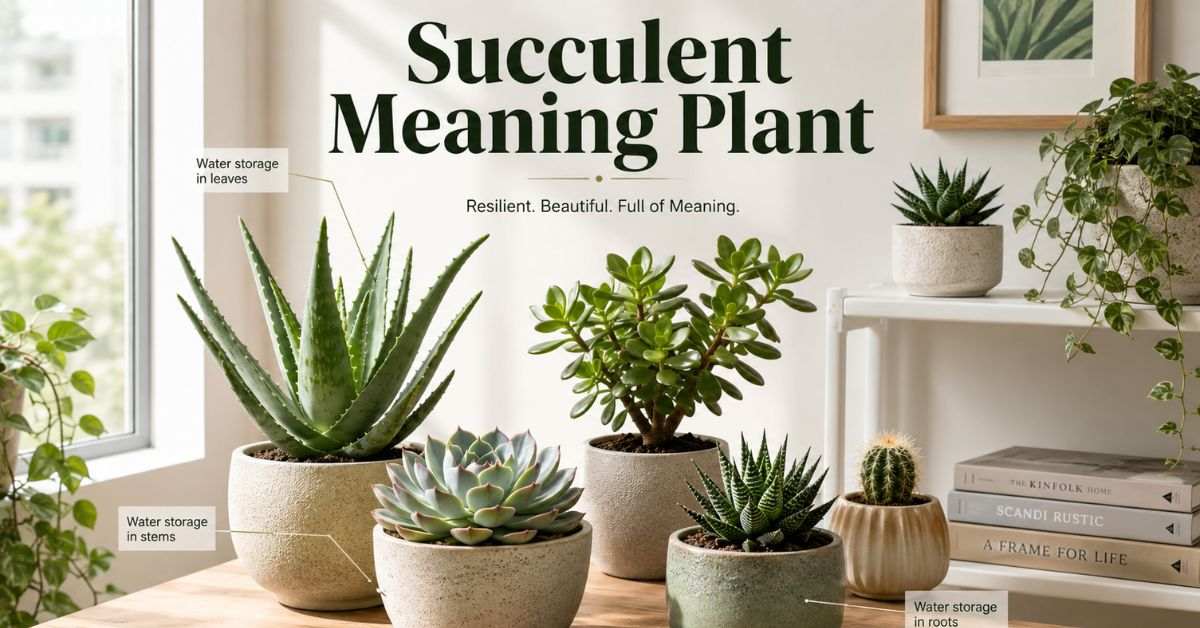
Succulent plants have become a popular choice for homes, offices, balconies, and gardens because they combine beauty with smart natural design. The succulent meaning plant refers to a plant that stores water in thick leaves, stems, roots, or a swollen base. This built-in water reserve helps the plant survive dry periods, poor soil, strong sunlight, and irregular rainfall. Aloe, jade plants, echeveria, agave, and cacti are familiar examples, but they do not all belong to the same plant family.
Understanding how succulents store and use water makes them easier to identify and care for. Their firm leaves, waxy surfaces, compact shapes, and special roots are not only decorative features; they are survival tools. This guide explains their meaning, major types, natural habitats, water-storage systems, and basic care needs. It also clears up common confusion between succulents and cacti, helping beginners choose suitable plants and avoid problems such as overwatering, weak growth, and root rot.
What Does Succulent Mean in Plants?
The succulent meaning plant definition refers to a plant that stores water in thick leaves, stems, roots, or a swollen base. This saved moisture helps the plant survive when rainfall is irregular or the surrounding soil becomes dry.
“Succulent” is not the name of one plant family. Succulent meaning plant describes a survival feature found in several unrelated plant groups. Aloe stores water mainly in its pointed leaves, while a cactus usually stores most of its water inside a thick green stem. Therefore, the succulent meaning of the plant is based on how the plant survives rather than its color, size, shape, or botanical family.
Why Do Succulents Store Water?
Many succulents naturally grow in places where rainwater does not remain available for long. The ground could be shallow, rocky, sandy, or exposed to intense heat. These plants absorb water when succulent meaning plant becomes available and save part of it inside their living tissues.
Their main survival features include:
- Thick leaves or stems that act as water tanks
- Waxy surfaces that reduce moisture loss
- Compact shapes that limit exposure to heat
- Roots that absorb rainwater quickly
- Small pores that help control water loss
These adaptations clearly explain the meaning of a succulent plant. Its thick and fleshy parts are not only attractive features. They help the plant remain alive during extended dry periods.
Where Do Succulents Store Water?
The water-storage area depends on the plant species. Some succulents have plump leaves, while others depend on enlarged stems, roots, or swollen bases.
| Storage area | Common appearance | Examples |
| Leaves | Thick, firm, rounded, or pointed leaves | Aloe, jade, echeveria |
| Stems | Ribbed, padded, or column-shaped stems | Cacti and some euphorbias |
| Roots or base | Enlarged roots or a swollen lower trunk | Desert rose and caudex plants |
This comparison shows why the succulent meaning of a plant cannot be understood by examining leaves alone. Some species keep most of their water inside the stem or below the soil.
Are Succulents and Cacti the Same?
Every cactus is considered a succulent, but not every succulent is a cactus. True cacti have special growing points called areoles. These small areas can produce spines, flowers, hairs, branches, or new growth. Aloe and agave plants may have sharp leaf edges, but they do not have cactus areoles.
The main differences are the following:
- Cacti belong to the cactus family.
- Most cacti store water inside their stems.
- Many other succulents store water in leaves.
- Spines do not always identify a cactus.
- Aloe, jade, and echeveria are not cacti.
The succulent meaning plant covers many water-storing species, while the word “cactus” describes one particular plant family within this wider group.
Common Types of Succulent Plants
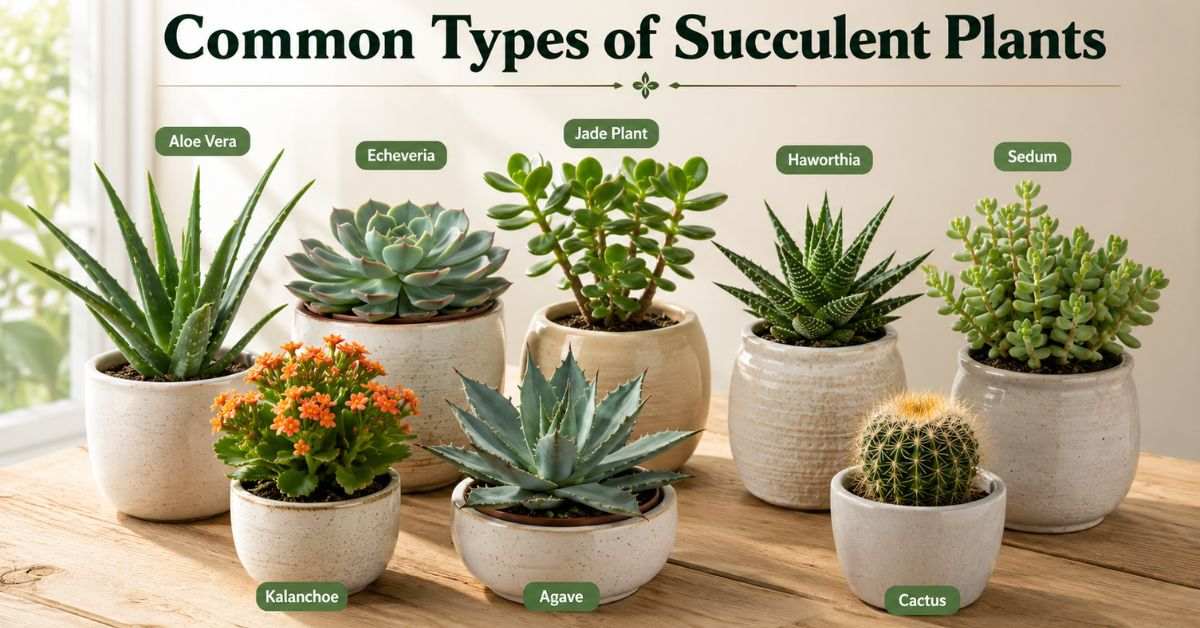
Popular indoor varieties include aloe vera, jade plant, haworthia, kalanchoe, and echeveria. Aloe has long pointed leaves, while jade plants have smooth, rounded leaves. Echeverias form attractive rosettes that may appear green, pink, blue-grey, or purple. Sedum, sempervivum, and agave are examples of outdoor varieties. Some sedums spread across the ground, while sempervivum plants form tight rosettes and produce small offsets. Agaves are usually larger and develop strong leaves around a central growing point. These examples add detail to the succulent meaning plant because they show how one water-saving system can produce many different shapes and sizes.
How Can You Identify a Succulent?
Correct identification should depend on several features rather than one thick leaf. Some tropical houseplants also have fleshy leaves, but they may need more regular moisture.
Look for these common signs:
- Thick leaves, stems, roots, or a swollen base
- A waxy, powdery, hairy, or firm surface
- Rosette, pad, column, bead, or compact growth
- Firm tissues even after the soil becomes dry
- Damage when the soil remains wet for too long
A plant label or trusted identification guide can confirm the species. Knowing its exact name makes the succulent meaning plant more useful because watering, temperature, and lighting requirements differ between varieties.
Where Do Succulents Grow Naturally?
Succulents are often connected with deserts, but they also grow on rocky slopes, coastal cliffs, dry grasslands, mountains, forests, and tree branches. Their habitats are united by limited access to usable water rather than constant heat.
| Natural habitat | Main conditions | Common examples |
| Dry land | Limited rain and fast drainage | Cacti and agave |
| Rocky slopes | Thin soil and exposed roots | Sedum and sempervivum |
| Tropical forests | Warm air and filtered light | Christmas cactus |
| Coastal areas | Wind, salt, and sandy soil | Ice plants and some aloes |
This wider habitat range enhances the explanation of what a succulent is. A succulent is more accurately described as a water-storing plant than simply as a desert plant.
How to Care for Succulents
Most common varieties require suitable light, rapid drainage, and careful watering. Constantly wet soil can be dangerous because stored water already keeps their leaves and stems full.
Follow these basic care steps:
- Use a container with at least one drainage hole
- Choose a loose and fast-draining potting mixture.
- After giving the soil a thorough watering, let it dry.
- Provide the correct light level for the species.
- Reduce watering when plant growth becomes slower
The succulent meaning plant provides an important care clue: a plant designed to save moisture usually does not require daily watering.
Common Problems and Solutions
Soft, yellow, or transparent leaves often suggest excessive watering. Wrinkled leaves may indicate thirst, although damaged roots can create the same problem because they cannot absorb moisture. Long and weak growth usually means the plant requires brighter light.
Useful solutions include
- Allow wet soil to dry and inspect the roots.
- Move stretched plants gradually into brighter light.
- Protect indoor plants from sudden harsh sunlight
- Remove badly rotted tissue using clean tools
- Check leaf joints for mealybugs and scale insects.
The significance of the succulent plant explains why overwatering is such a prevalent issue. Fleshy tissues hold moisture effectively, but they may rot when roots remain wet and receive insufficient air.
Why Are Succulents Popular?
Succulents fit easily on windowsills, desks, balconies, and small garden beds. Their many forms include colorful rosettes, hanging stems, upright columns, and rounded leaves. Many varieties also require less frequent watering than ordinary leafy houseplants. They are useful teaching plants because changes in color, shape, and firmness can reveal unsuitable growing conditions. The succulent meaning of the plant connects its attractive appearance with an important lesson about plant adaptation and water conservation.
FAQs
Do all succulents come from deserts?
No. Succulents also grow in forests, mountains, grasslands, coastal areas, and rocky habitats.
How often should a succulent be watered?
Water succulent meaning plant after the soil has dried enough for its species, season, pot size, and surroundings.
Can succulents grow indoors?
Yes. They can grow indoors with suitable light, airflow, drainage, and temperature.
Why are succulent leaves thick?
Their thick tissues store water for periods when moisture is limited.
Is aloe a cactus?
No. Aloe is a leaf succulent, but succulent meaning plant does not belong to the cactus family.
Conclusion
The word “succulent” describes a plant that stores water in fleshy leaves, stems, roots, or a swollen base. This useful feature supports survival when rainfall is limited, soil drains quickly, or dry periods continue for several weeks. Succulents belong to multiple families, and not all require desert conditions. Understanding the succulent meaning of a plant can also improve everyday care. Most varieties need a draining container, suitable light, and soil that is allowed to dry between watering sessions. However, some rainforest species may prefer slightly different conditions.
Begin by identifying your plant, examining where succulent meaning plant stores water, and checking the soil before adding moisture. These simple habits can prevent root rot, weak growth, and unnecessary stress while keeping your succulent healthy and attractive.