

Introduction
Online accounts are part of daily life. Students use school portals, workers use company dashboards, shoppers use online stores, and families use banking apps. Every login needs protection because one weak password can put private information at risk.
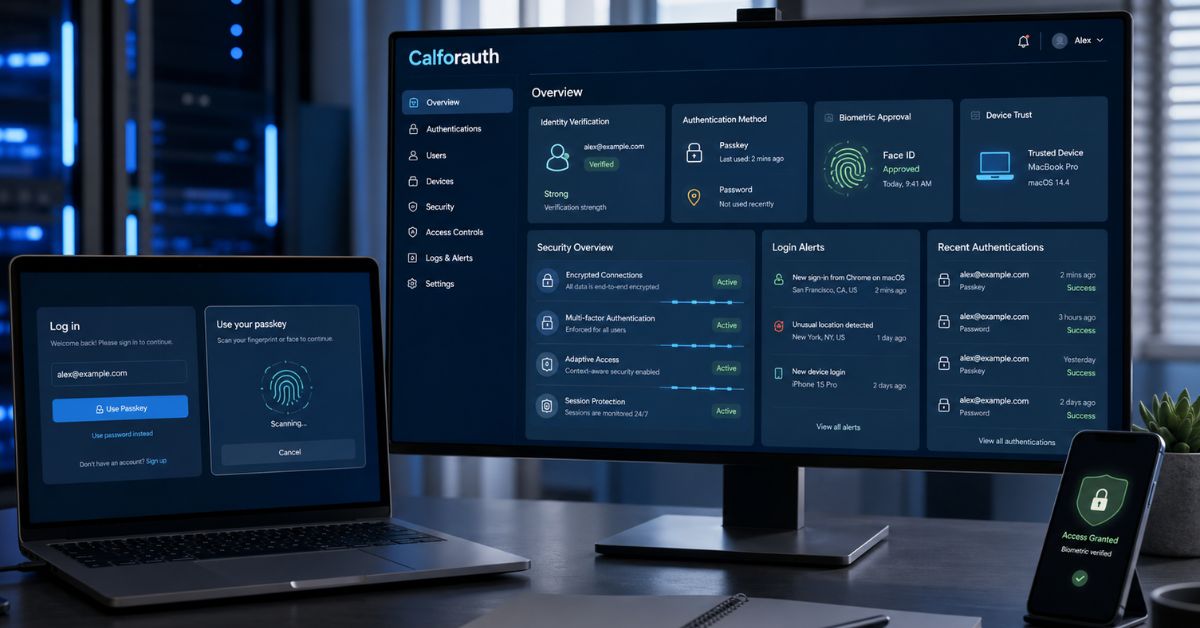
Calforauth is a digital authentication tool designed to make online access safer and easier. It helps users confirm their identity before entering an account or system. Instead of depending only on passwords, modern login tools can use extra checks like multi-factor authentication, device approval, passkeys, and secure access rules.
In 2026, people need login systems that are simple, fast, and safe. No one wants confusing steps, but no one wants hacked accounts either. This guide explains how modern authentication works, why Calforauth matters, and how users and businesses can protect their online identity in an easy way.
What is Calforauth?
Calforauth is used to describe a tool that helps manage digital authentication. In simple words, authentication means checking if a person is really who they say they are before giving access to an online account. Think of it like a smart lock for digital spaces. A normal lock may only need one key. A modern digital lock may check your password, your phone, your device, or your fingerprint before opening the door.
This type of system can help protect the following:
- Personal accounts
- Work dashboards
- School portals
- Customer records
- Payment systems
- Private files
- Business tools
The goal is not only to block hackers. A good login system should also make life easier for real users. It should help people sign in quickly while keeping private data safe. For example, if a worker logs in from a new country or unknown device, the system may ask for an extra security step. This helps stop unwanted access before damage happens.
Why Secure Login Matters in 2026
In 2026, cyber attacks are more common and more advanced. Many attacks still start with weak passwords, stolen login details, fake emails, or phishing pages. This is why secure login is now a basic need for everyone. Frequently, a straightforward password is insufficient. Calforauth is possible for people to use the same password across numerous websites. If one website gets hacked, attackers may try that same password on email, banking, or work accounts.
Secure authentication helps by:
- Reducing account theft
- Protecting private data
- Stopping fake login attempts
- Helping businesses follow security rules
- Building trust with customers
- Making account recovery safer
For students, it protects school records. For workers, it protects company tools. For business owners, it protects customer data and brand trust. Modern tools like Calforauth are useful because they support safer access without making the process too difficult for normal users, thereby enhancing security for both workers and business owners by ensuring that only authorized individuals can access sensitive tools and data.
How Digital Authentication Works
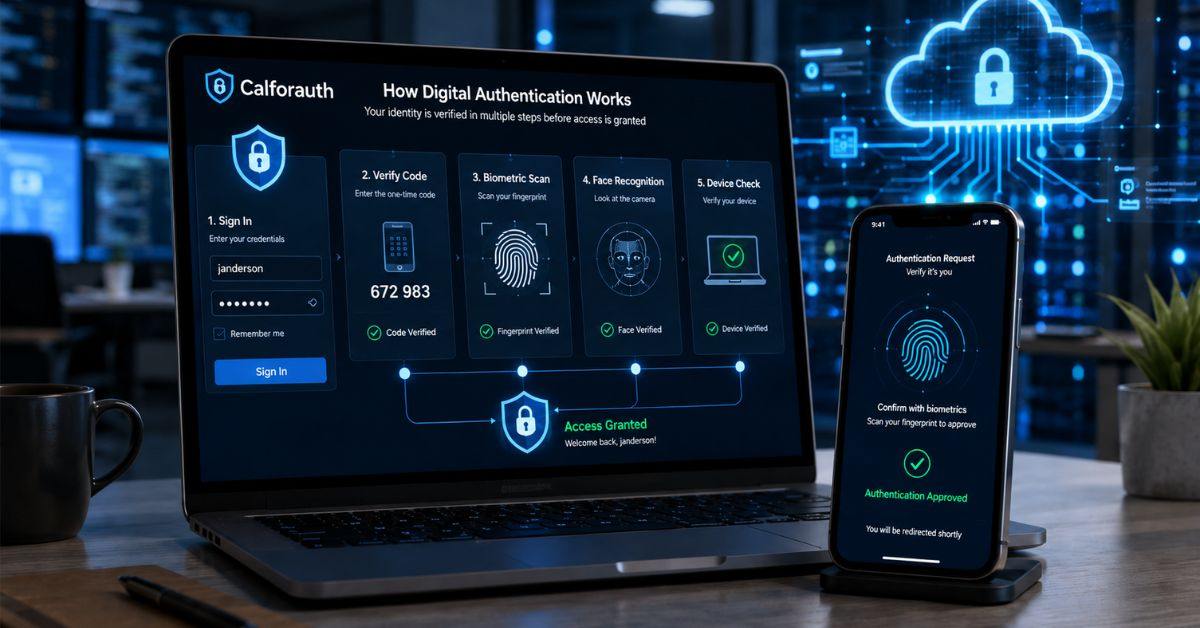
Digital authentication checks a user before providing access. This check can happen in different ways. Some systems use only a password, while stronger systems use two or more checks.
There are three common types of login checks:
- Something you know: A password or PIN
- Something you possess: A trusted gadget, phone, or security key
- Something you are: A fingerprint, face scan, or other biometric check
When a system uses more than one check, it is called multi-factor authentication (MFA), which enhances security by requiring different types of verification methods. For example, you may enter your password and then approve the login on your phone. Some modern systems also use risk-based checks. This means they look at signs like the following:
- Is this the user’s normal device?
- Is the login location unusual?
- Is the login time suspicious?
- Has the account had failed login attempts?
If something looks risky, the system can ask for another step before allowing access.
Main Features of a Good Login Tool
A good authentication platform should protect users, but Calforauth should also be easy to use. If a login system is too confusing, people may avoid using it properly.
Here are important features to look for:
| Feature | What It Means | Why It Helps |
| Multi-factor authentication | Uses more than one login check | Adds extra account protection |
| Passkey support | Lets users sign in without normal passwords | Reduces password theft risk |
| Device recognition | Checks if the device is trusted | Blocks strange login attempts |
| Role-based access | Gives users only the access they need | Protects sensitive areas |
| Login alerts | Warns users about unusual activity | Helps users act quickly |
| Audit logs | Records login history | Helps admins review access |
A strong tool should also have a clean dashboard. Users should understand what to do without needing technical knowledge. For example, instead of showing a confusing error, the system should say, “We noticed a login from a new device. Please confirm it is you.”
Passwords vs. Modern Authentication
Passwords are easy to use, but they are also easy to steal, forget, or reuse. Modern authentication adds stronger protection.
| Login Method | Security Level | Ease of Use | Best For |
| Password only | Low | Easy | Low-risk accounts |
| Password + SMS code | Medium | Easy | Basic protection |
| Authenticator app | Strong | Medium | Personal and work accounts |
| Passkey | Very strong | Easy | Modern secure login |
| Hardware security key | Very strong | Medium | Admins and high-risk users |
A password-only system may be fine for a low-risk account, but it is not enough for banking, work, or private data. Stronger options, like passkeys and authenticator apps, give better protection. Calforauth can be understood as part of this modern shift towards enhanced security measures for online accounts. It supports the idea that login should be safer, smarter, and easier to manage.
Benefits for Users and Businesses
A secure identity access system helps both normal users and organizations. For users, it lowers stress. For businesses, it lowers risk.
Benefits for users
- Easier account access
- Better protection from hackers
- Fewer password problems
- Safer account recovery
- More control over personal identity
Benefits for businesses
- Better customer trust
- Fewer support requests
- Stronger data protection
- Safer employee access
- Better control over user permissions
- Clear login records for review
For example, an online store can use secure authentication to protect buyer accounts. A school can use it to protect student data. A company can use it to manage employee access to tools and files. Good digital authentication is not just a security feature. It is also a trust feature. When users feel safe, they are more likely to use a platform with confidence.
Best Practices for Safer Access
Even the best tool needs positive habits. Users and businesses should follow simple security steps to stay protected.
Here are smart practices:
- Turn on MFA (multi-factor authentication) for important accounts to enhance security.
- Use passkeys where possible
- Avoid using the same password on many sites.
- Never share login codes with anyone.
- Check login alerts quickly
- Remove old users from business accounts
- Keep recovery email and phone numbers updated.
- Use strong admin controls
- Train users to spot fake login pages
Businesses should also review access often. If an employee leaves, please ensure their account is removed or disabled promptly. If a user changes roles, their permissions should be updated. A beneficial rule is to provide people only the access they need. This is called “least privilege.” Calforauth helps reduce damage if one account is ever misused.
Common Mistakes to Avoid
Many login problems happen because of small mistakes. These mistakes are easy to avoid when users understand them.
Common mistakes include:
- Using weak passwords like “123456”
- Reusing the same password everywhere
- Ignoring strange login alerts
- Clicking fake login links in emails
- Sharing codes with friends or coworkers
- Giving admin access to too many people
- Forgetting to remove old users
- Not updating security settings
Another mistake is choosing a tool only because it looks modern. Evaluate a secure login solution based on its features, privacy rules, support, and ease of use.
Before using any authentication tool, ask these questions:
- Does it support MFA or passkeys?
- Is it straightforward for beginners?
- Can admins manage users clearly?
- Are login alerts simple to understand?
- Does it protect private data properly?
These questions help users make safer choices.
How to Choose the Right Authentication System
Choosing the right identity protection tool depends on your needs. A student, a small business, and a large company may not need the same setup. For personal use, focus on simple protection. Use MFA (multi-factor authentication), passkeys, and strong recovery settings to enhance security. For small businesses, choose a tool that is easy to manage and does not require a large IT team. For larger companies, look for role-based access, audit logs, compliance support, and advanced monitoring.
A good system should be:
- Simple enough for everyday users
- Strong enough to stop common attacks
- Clear enough for admins
- Flexible for different devices
- Helpful during account recovery
- Transparent about privacy and data use
Calforauth should be reviewed with these points in mind. The best tool is not always the most complex one. The best tool is the one that keeps users safe while staying easy to use, ensuring that it effectively balances security and user experience in the evolving landscape of digital authentication.
Future of Digital Authentication
The future of login is moving away from normal passwords. In 2026, more websites and apps are using passkeys, biometric checks, trusted devices, and smarter risk detection. This change is happening because users want faster access, and businesses want stronger protection. Passwordless login can reduce the risk of stolen passwords. MFA can stop many unwanted login attempts. Device checks can notice suspicious behavior before it becomes a serious problem.
In the coming years, users may see more:
- Face or fingerprint login
- Passkey-based accounts
- Smarter fraud detection
- Safer account recovery
- Better privacy controls
- Fewer password reset problems
The main goal is simple: make online access safer without making it harder.
FAQs
What is Calforauth used for?
Calforauth helps manage secure digital login, identity checks, and safer online access.
Is modern authentication better than passwords?
Yes. MFA, passkeys, and device checks are safer than using only a password.
Can small businesses use authentication tools?
Yes. Small businesses can use them to protect staff accounts, customer data, and admin dashboards.
What is MFA?
MFA means multi-factor authentication. Calforauth uses more than one step to confirm your identity.
Are passkeys safe?
Yes. Passkeys are safer than normal passwords because they are harder to steal or phish.
Conclusion
Digital security is important for everyone in 2026. Whether you are a student, worker, business owner, or everyday internet user, your online accounts need strong protection. Passwords alone are no longer enough for important accounts.
Calforauth represents a modern way to think about secure login. It focuses on safer identity checks, smoother access, and better control over online accounts. With features like MFA (multi-factor authentication), passkeys, login alerts, and access rules, users can protect private information without making login too hard.